Market analysis
What we do differently
from everyone in the
M&A space.
Twenty-one credible alternatives, grouped by what they actually do rather than what they call themselves. This is an honest look at all of them — including the situations where somebody else is a better fit for you than we are.
The structural observation
Seven stages to own a business. The category leader serves one.
—
served
—
—
—
—
—
Who owns the listing site
The category's default marketplace has operated since 1996 and sits inside a commercial real-estate information group — a profitable advertising asset in a larger portfolio, with no reason to innovate.
Where its money comes from
Sellers and brokers pay to list. Revenue is a function of listings posted and leads delivered — not transactions completed.
Why it stays that way
Every improvement for the buyer — standardised financials, buy-side representation, close support — reduces the listings needed to produce a sale, and therefore its own revenue.
The landscape
Twenty-one alternatives, in six categories
| Category | Who | What they solve | What you still carry alone |
|---|---|---|---|
| Done-for-you buy-side firms | Acquira, Peterson, Regalis, Greenland | The closest comparables — sourcing, diligence and financing, sometimes post-close support. | Narrow vertical focus, undisclosed pricing, and no second route if you cannot meet the capital requirement. |
| Courses & communities | Carl Allen, Cody Sanchez, Roland Frazier, Walker Deibel | Curriculum and peer group, paid up front. | All four jobs. Their economics are complete before you have done anything. |
| Listing marketplaces | BizBuySell / BizQuest, Flippa, Acquire.com | Discovery — an inventory of businesses already on the open market. | Everything after discovery, on listings every other buyer has already seen. |
| AI-native sourcing | OffDeal, Baton and similar | Off-market owner identification and outreach, at falling cost. | Three of the four jobs. A list of owners, no lender, no structuring, nobody to run it. |
| Business brokers | Sunbelt, Transworld, Murphy, IBBA | They own the listing supply, and they are free to the buyer. | Representation. The duty runs to the seller and nobody is paid to solve your financing. |
| Single-step specialists | SBA lenders, DueDilio, fractional CFO networks | One slice each, done well — capital, diligence, or post-close management. | The other six stages, and the work of assembling the specialists into a process. |
Where everyone sits
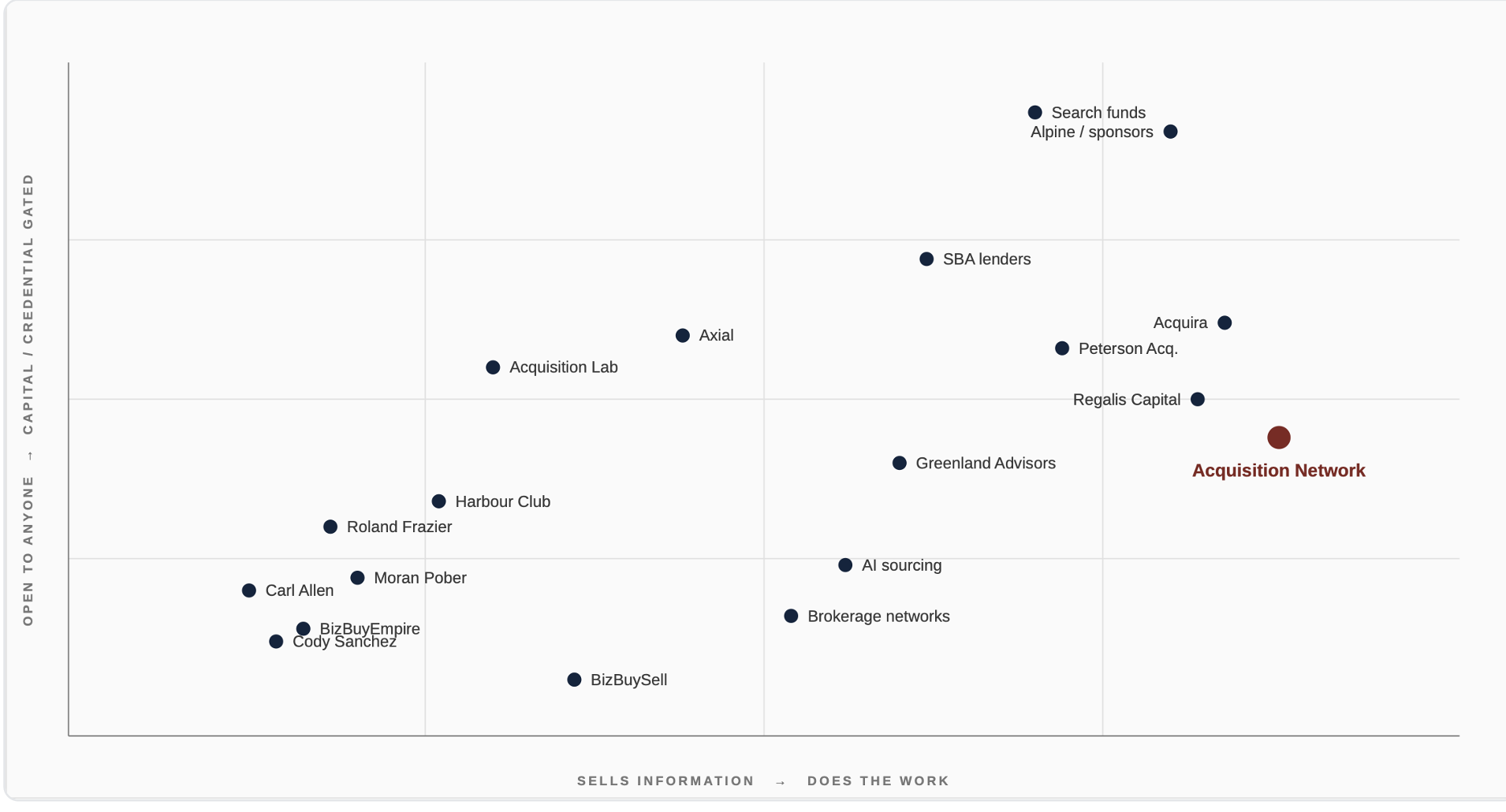
The bottom-right corner is empty
Two axes. Across: does a participant sell you information, or do the work for you. Up: how gated they are — open to anyone at the bottom, capital and credential requirements at the top. Twenty-one alternatives, plotted.
Bottom left — the course industry
Open to anyone, sells information. You get a curriculum and still do all four jobs yourself.
Top right — funds and sponsors
They do the work, but they decline almost everyone and keep the majority of the equity.
Bottom right — the empty corner
Does the work and open to anyone. That is the position, and the three products are how we hold it.
The four categories we sit across
Marketplace, network, education, software
Today those are four separate industries and the buyer is the integration layer holding them together. The premise of this company is that they belong in one place — social media for acquisitions and business consulting.
Marketplace
Where the businesses are
BizBuySell, Flippa, Acquire.com
Network
Where the people are
LinkedIn, Axial, broker networks
Education
How the work is learned
Carl Allen, Cody Sanchez, Acquisition Lab
Software
How the process runs
CRM, data rooms, task tools, chat
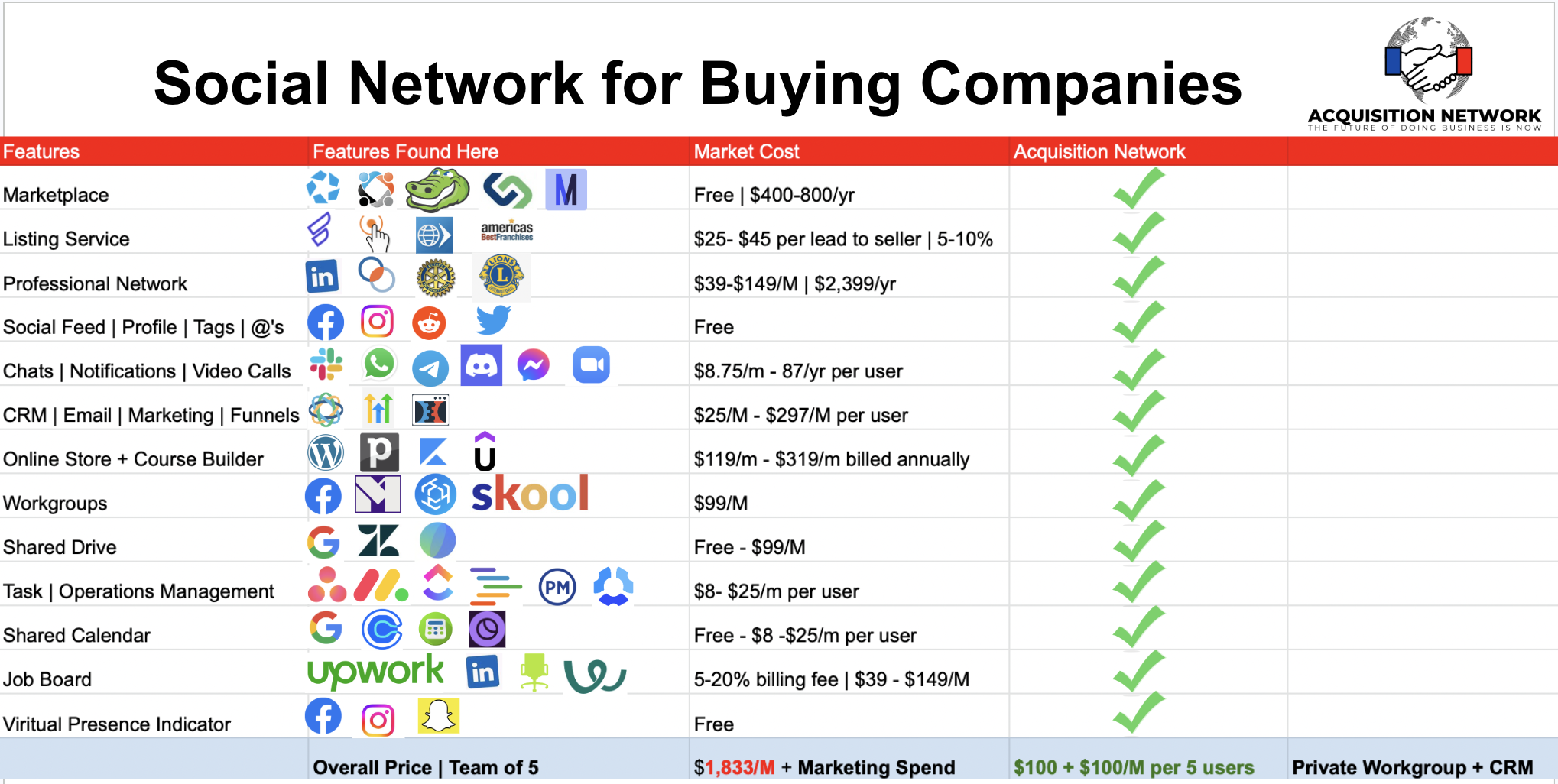
Competitor scale figures are indicative, drawn from public sources and our own research. Confirm directly with each provider before making a decision.
Ready to talk it through?
A fit conversation — your criteria first, products second, and a straight answer about whether there's a fit at all.